
 admin on
 The Smart Drug Rabbit Hole: What Nootropics REALLY Do to Your Brain
Nobody wakes up in a morning and considers that he or she will be operating at 60 per cent mentally and will be absolutely okay about that. Here we are thrown, foggy, and require a third cup of coffee prior to noon. It was the break and the nootropics market had a truck come through the gap.
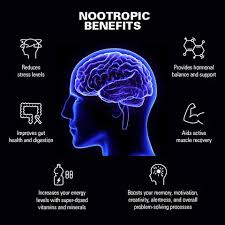
Nootropics are intellectual stimulants. Miscellaneous substances which promise to sharpen your memory, quicken your thinking, sharpen your focus, or enhance your mood without making you a jittery mess. Some are synthetic. Some are even cultivated out of the soil. There are those who have years of research experience. Others are an exceptionally good Reddit post and not much or nothing more What Are Nootropics.
A brief creation narrative.
Romanian scientist Corneliu Giurgea, coined the term in 1972 by combining the Greek words mind and bend. In his original definition he was strict that a substance would only qualify as a nootropic when it was found to promote learning, prevent the loss of the brain during stress and was found to have minimum side effects. By that criterion, most of the products marketed as nootropics today would not even have been considered as such. But the name was not changed, and the type exploded.
Beginning with the fundamentals.
The most used psychoactive drug in the world is caffeine. Most of the people never thought that it is a nootropic but it qualifies as one. It is an inhibitor of adenosine receptors which reduces the perceived fatigue and enhances attention. The problem is the crash – and the terror that some people develop despite moderate doses.
But add caffeine and L-theanine, however, and something interesting will happen. L-theanine, an immensely concentrated constituent of green tea, triggers alpha brainwave activity – the identical state of mind of being calmly alert. Their mixture causes them to be counterparts. Reduced jitter, increased sustained attention. This is a more clinically supported combination than most of the more expensive so called brain supplements that are available in the market. It is cheap, dull and really works. Occasionally the low-tech solution prevails.
The synthetic tier
The waters become unclear and interesting at the same time at Piracetam. In reality, created in the 1960s, the compound was in fact the one that Giurgea synthesized when coining the nootropic concept. Users report that verbal recall improves, they are able to reason when under pressure, articulate complex ideas, etc. Some refer to it as a form of thinking in HD. The science, however, is vexingly erratic – trials have been mixed on the basis of the population studied. It seems that healthy young adults are not benefited as much as older persons or those with cognitive impairment.
In the other corner is modafinil. It is designed to treat narcolepsy patients, but bypasses the normal flooding of the brain by dopamine, as traditional stimulants do. This is important – the machine creates a reduced number of crashes and less addiction potential. Silicon Valley was taught the lesson the hard way. One of my fintech friends said that his days on modafinil were actually called that: Eight hours felt like two, I just stopped noticing whether I was hungry, the work just got done. He also said that he in time stopped as he could not know whether he was sharper or just more open. It is a difference worth perching over.